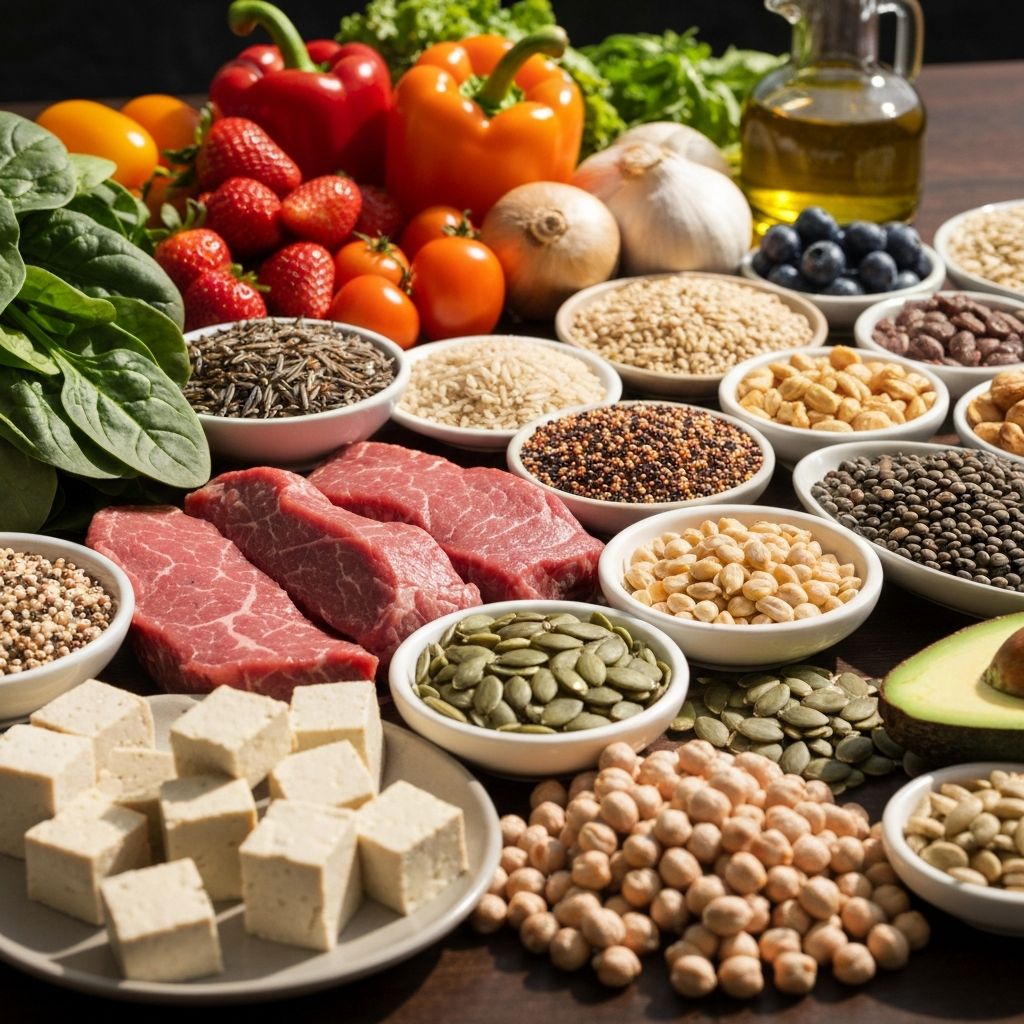
An exploration of macronutrients, micronutrients, food groups, and general principles of nourishing dietary practices.
Nutrition is the science of how food provides the chemical compounds the body needs to function. These compounds sustain growth, maintain health, and support physical activity. Understanding nutritional principles enables individuals to make informed dietary choices aligned with their circumstances.
Macronutrients are nutrients required in large quantities and provide energy and structural building blocks:
Essential amino acid chains that form muscle, connective tissue, enzymes, and numerous physiological structures. Found in meat, fish, eggs, legumes, dairy, and plant-based sources. Protein is essential for tissue maintenance and adaptation to training stimulus.
Primary energy source for the body and brain. Include simple sugars, complex carbohydrates, and fiber. Sources include grains, fruits, vegetables, and legumes. Carbohydrates support physical activity, cognitive function, and digestive health.
Essential for hormone production, cell membrane structure, nutrient absorption, and energy storage. Include saturated, unsaturated, and polyunsaturated varieties. Sources include oils, nuts, seeds, fish, and fatty meats. Diverse fat sources are part of balanced nutrition.
Required in smaller quantities but essential for numerous physiological functions:
Rich in vitamins, minerals, fiber, and phytonutrients. Support digestive health, provide antioxidants, and contribute to sustained energy and nutrient density.
Support muscle development, tissue repair, and immune function. Diverse sources—animal and plant-based—provide different nutrient profiles and benefits.
Provide sustained energy through complex carbohydrates, fiber for digestive health, and B vitamins for energy metabolism.
Essential for hormone production, nutrient absorption, and cognitive function. Omega-3 and omega-6 fatty acids support various physiological processes.
Dense sources of protein, fiber, vitamins, and minerals. Support satiety, digestive health, and provide diverse nutritional profiles.
Sources of protein and calcium supporting bone health, muscle development, and overall nutritional needs.
Water is essential for virtually every physiological process: temperature regulation, nutrient transport, waste removal, joint lubrication, and cognitive function. Adequate hydration supports:
Hydration needs vary based on activity level, climate, and individual factors. General guidance emphasizes consistent hydration throughout the day.
Choosing foods that provide substantial nutritional value relative to caloric content. Whole, minimally processed foods typically offer greater nutrient density than processed alternatives.
Different foods provide different nutrient profiles. Consuming diverse foods from various groups ensures a comprehensive nutrient intake across vitamins, minerals, phytonutrients, and macronutrients.
While the importance of meal timing is sometimes overstated, consuming consistent meals throughout the day supports stable energy levels, metabolic function, and training recovery.
Nutritional needs, food preferences, cultural practices, and dietary philosophies vary among individuals. What constitutes "balanced nutrition" can take many different forms while achieving nutritional adequacy.
Whole foods—vegetables, fruits, grains, legumes, meats, nuts—are minimally processed and retain nutrient density. Processing can reduce nutrient content and add excess sodium, sugar, or unhealthy fats. However, some processing (like freezing or canning) preserves nutritional value.
Nutrition labels provide standardized information about caloric content, macronutrients, and some micronutrients. Understanding label information enables informed food choices.
Eating with awareness—noticing hunger and satiety cues, appreciating food quality, and eating without distraction—supports better nutritional habits and satisfaction.